COLUMN: Living in a time when every second counts
Published 5:00 am Wednesday, February 4, 2026
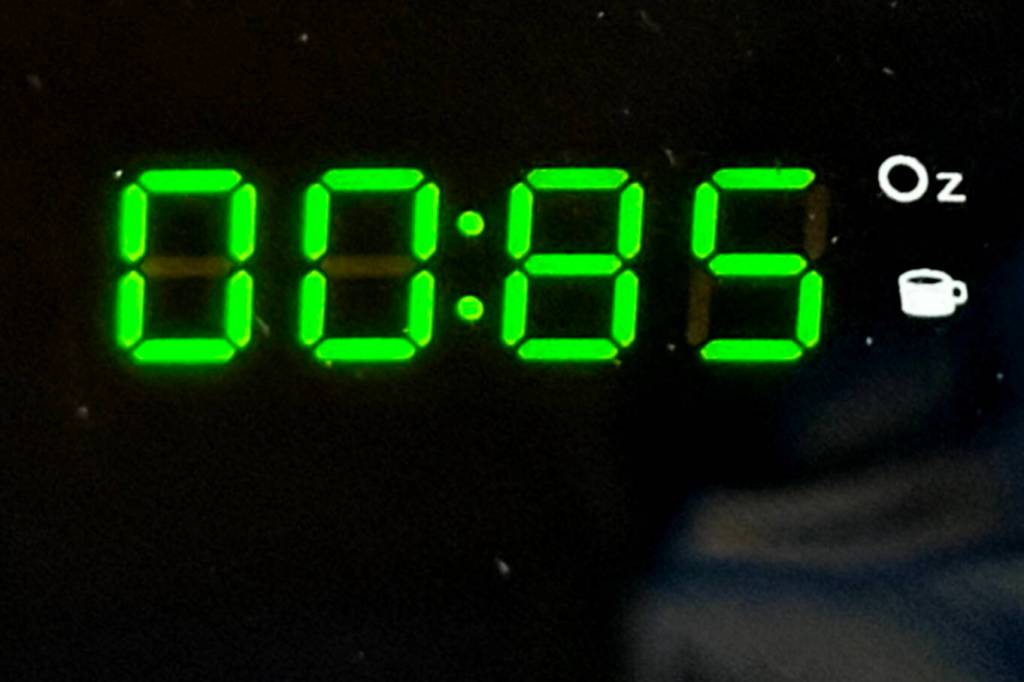
Every second matters.
The message was reinforced on Jan. 27, when the hands on the Doomsday Clock were moved to 85 seconds before midnight, the closest to midnight in the clock’s history.
The clock, from the Bulletin of the Atomic Scientists’ Science and Security Board, is set each year in late January to show the likelihood of a human-caused global catastrophe.
Midnight here represents a global catastrophe resulting in irrevocable harm to humanity. Any time before midnight suggests the risks can still be averted.
The Bulletin of the Atomic Scientists was founded in 1945 by Albert Einstein, J. Robert Oppenheimer, and University of Chicago scientists who helped develop the first atomic weapons in the Manhattan Project. These were people who understood the power and dangers of advancing technologies.
In 1947, when the Doomsday Clock was first shown, concerns about nuclear weapons and nuclear war were at the forefront. Today, climate change and artificial intelligence are also added to the factors affecting the time shown on the clock.
While the hands of the clock have been moved backward on occasion, the timeline has shortened in recent years.
Since 2020, the time has been determined in seconds, not minutes. In 2020, the hands were set at 100 seconds. In 2023, the time was moved to 90 seconds and in 2025 it was adjusted to 89 seconds. And now, at 85 seconds before midnight, the clock is at its shortest time on record.
This short timespan sends a chilling message.
Sitting down to watch a movie is pointless, as 85 seconds might not even be enough to get through the opening credits.
Listening to the entirety of the 1987 R.E.M. song It’s the End of the World as We Know It (And I Feel Fine) takes 4:04.
Watching the world record in the 1,500-metre race, set at the 2024 Summer Olympics in Paris, takes more than 85 seconds. The record-setting time was 3:27.65.
A minor penalty in hockey is two minutes, or 35 seconds more than the amount of time on the Doomsday Clock.
It might be possible for someone at a coffee shop counter to order a drip coffee, pay for it and receive it within 85 seconds, but that would leave no time to enjoy the coffee.
When the Doomsday Clock shows seconds remaining, it is easy to sink into a state of nihilism, viewing everything as meaningless. If the world is down to its final seconds, is there any point in making plans or working toward a better future?
However, the Doomsday Clock is not meant to show the number of seconds remaining for humanity, but rather the intensity of human-caused threats facing our world.
It is meant to convey urgency, not hopelessness.
The most recent message from the Bulletin of the Atomic Scientists does not mince words.
“Hard-won global understandings are collapsing, accelerating a winner-takes-all great power competition and undermining the international cooperation critical to reducing the risks of nuclear war, climate change, the misuse of biotechnology, the potential threat of artificial intelligence, and other apocalyptic dangers,” the 2026 statement reads.
“Far too many leaders have grown complacent and indifferent, in many cases adopting rhetoric and policies that accelerate rather than mitigate these existential risks.”
Still, the organization notes that it is possible to make positive changes, addressing nuclear weapons, artificial intelligence concerns, climate change, biological threats and other risks.
The hands on the clock have been set. The message is clear. But instead of focussing on the next 85 seconds, it would be wiser to look further ahead.
This is the time to plan ahead, looking for ways to make the world better in the next 85 days, or 85 years or 850 years.
Efforts taken right now may help to offset the chilling message from the Bulletin of the Atomic Scientists, but there’s no time to lose.
Every second counts.
John Arendt is the editor of the Summerland Review.