Water briefs: Okanagan watershed snowpack levels reduced
Published 12:00 pm Saturday, March 7, 2026
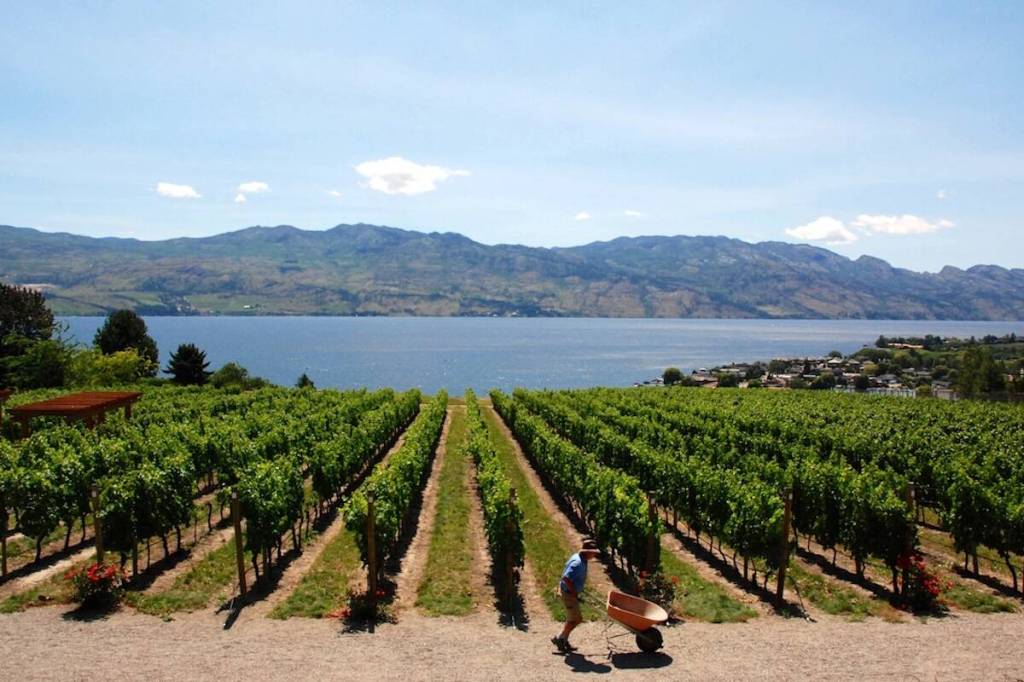
While it has been a mild winter in the Okanagan, that doesn’t bode well for snowpack levels across the watershed.
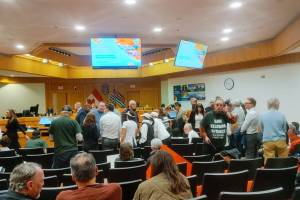
In a staff update to the Okanagan Basin Water Board (OBWB) at its March 3 meeting, the average snowpack level for the Okanagan as of Feb. 17 was 78 per cent of normal.
In particular, the Brendan Mines snowpack monitoring site was at 62 per cent of normal, the lowest snowpack recording for mid-February since the station was established in 1992.
Mission Creek and Silver Star monitoring site were also well below average at 70 and 88 per cent of normal respectively.
“Typically, by February, around two-thirds of the total snowpack will have accumulated,” states the report.
“While it is still too early to know how the freshet will look, low snowpack and warm temperatures increase the chance of an early, quick melt.”
***
Registration for an upcoming water and climate forum in Kelowna has reached full capacity.
The event takes place March 23-24 at the Delta Grand Resort, with various leaders from the Indigenous and non-Indigenous communities appearing as guest speakers.
They will include WFN Chief Robert Louie, Sylix scholar Aaron Derickson, consultant Gwen Bridge, BC Fruit Growers Association executive director Adrian Arts, Community Wildlife Planning Centre operations director Kelly Johnston and UBCO professor of economics John Janmaat.
***
Christina White, water quality project manager, and James Littley, chief operating officer, have supported three UBCO Capstone Groups.
Two of the projects are engineering related, and the other geared to sustainability.
One group has developed a mounting bracket for an underwater HD camera that can help milfoil operators define treatment areas.
A second group is working on a shading system for shallow and inaccessible areas that can be deployed in the spring or early summer to limit milfoil growth.
The third project is developing a regional response plan for invasive mussels, using the Snake River quagga mussel response for an immediate action mussel detection response in the Okanagan.
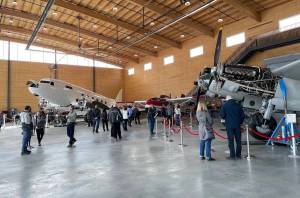
These projects will be showcased Friday, April 10, at the KF Aerospace Centre of Excellence, 5800 Lapointe Dr. in Kelowna, from 12:30 to 4:30 p.m.
***
The OBWB milfoil crew has completed rototilling in Wood Lake and both the Vernon and West Kelowna arms of Okanagan Lake for the winter.
Two machines are currently working in the Kelowna area and another in Kalamalka Lake.
***
Beavers are often stereotyped as being destructive to property and infrastructure by causing flooding, felling trees, and damaging roads, culverts and crops.
But a recent presentation by Jonathan Laumer and Eva Hartmann to the Okanagan Water Stewardship Council illustrated how beaver-based restoration efforts can also help improve watershed health by slowing water movement, increase water storage in the landscape, support wetlands and improve ecosystem habitat.
***
The call for applications for the 2026-27 Water Conservation and Quality Improvement Grant Program closed Feb. 20, with 34 grant proposals submitted with a total funding request value of $882,293 seeking support from the $350,000 in available funding.
The projects will be reviewed by OBWB staff and the projects to receive funding will be announced April 8.
The program provides funding to Okanagan local governments, improvement districts, Okanagan First Nation communities and non-profit organizations for projects that conserve and protect water, grounded in the shared principle of “One Valley, One Water.”
***
In recognition of World Water Day, the OBWB and UBCO Department of Earth and Environmental Sciences will host a free screening of the award-winning freshwater documentary All To Clear on Sunday, March 22, 2 p.m.
The film examines how quadrillions of invasive quagga mussels are transforming the Great Lakes at a scale not seen since the glaciers – raising urgent questions about what a similar invasion would mean for the Okanagan’s drinking water, fisheries, real estate values, tourism, recreation economy and cultural value.
Following the 90-minute film, there will be an expert panel discussion and question-and-answer opportunity for the audience.
The event takes place on the UBCO campus at the Commons 201 Theatre, 3297 University Way. Admission is free but registration is requested in advance online at WWD2026AIITooClear.eventbrite.ca.
***
The appointments from the Water Supply Association of B.C. board for 2026 are: Okanagan Basin Water Board – Bob Hrasko, Black Mountain Irrigation District; and David Best, City of Penticton; Okanagan Water Stewardship Council – Patti Meger, District of Lake Country; and Angela Lambrecht, Regional District of Central Okanagan.